
Aug 14, 2026WPC Profiles
WPC vs. Traditional Timber & Other Alternatives – A Comprehensive Comparison
WPC offers a compelling value proposition for B2B buyers
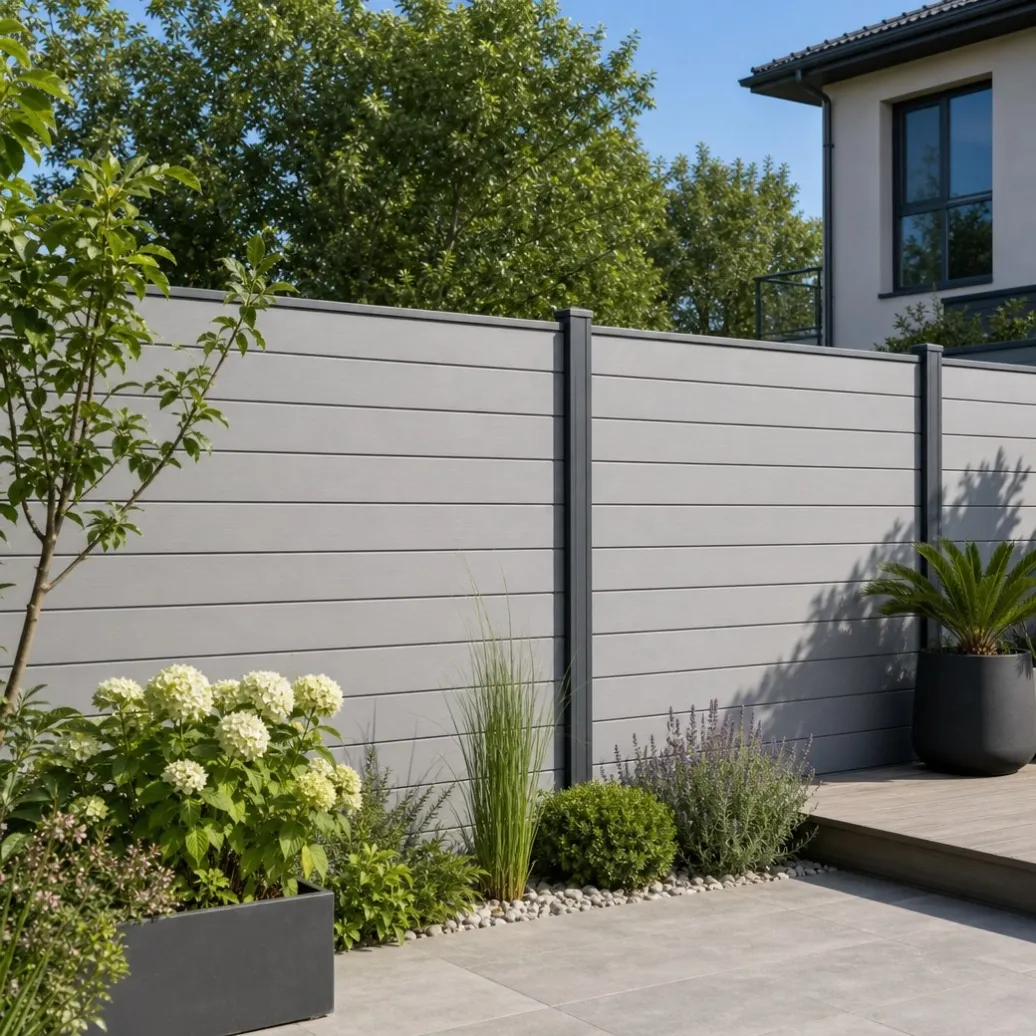
When selecting materials for outdoor projects, decision-makers face a range of options: traditional timber, preservative-treated wood, composite materials, and synthetic alternatives. As a leading WPC decking supplier and composite fencing manufacturer, NewYongTech provides this comprehensive comparison to help B2B buyers make informed procurement decisions.
The Problem with Traditional Timber
Natural wood has been the traditional choice for outdoor construction, but it comes with significant limitations:
Moisture Vulnerability – Wood absorbs water, leading to swelling, warping, rotting, and mould growth
Insect Susceptibility – Termites and wood-boring insects attack cellulose-based materials
High Maintenance – Timber requires regular sanding, staining, sealing, or painting every 2–3 years
Limited Lifespan – Depending on species and treatment, timber outdoor structures may last only 8–15 years before needing replacement
Preservative-Treated Wood vs. WPC
Feature | Treated Timber | WPC |
Rot resistance | Moderate (chemical treatment required) | Excellent (inherently rot-proof) |
Insect resistance | Moderate | Complete (no cellulose for insects to feed on) |
Maintenance | Requires sealing/re-treatment | None (rinse with water) |
Dimensional stability | Prone to warping/cupping | Excellent dimensional stability |
Lifespan | 8–15 years | 15–25+ years |
Environmental | Chemical treatments may leach | Recycled materials, 100% recyclable |
WPC vs. Alternative Composite Materials
Capped Polymer (PVC) Decking
Constructed entirely of synthetic material, capped polymer decking offers the highest moisture resistance and typically carries longer warranties (up to 50 years) . However, it lacks the natural wood fiber content that gives WPC its authentic appearance and texture.
Mineral-Based Composite (MBC) Decking
Containing minerals and polymers, MBC offers superior strength, exceptional moisture resistance, and high thermal stability — ideal for harsh environments . It is generally more expensive than WPC and has a less wood-like appearance.
WPC Profile Types – Matching Product to Application
Solid WPC Decking
Solid, heavy-duty boards suitable for high-traffic commercial applications, docks, and public spaces. These boards offer maximum load-bearing capacity and surface hardness .
Hollow WPC Decking
Lightweight and cost-effective, hollow decking is suitable for residential patios, balconies, and lower-impact applications . It reduces shipping costs and handling effort while providing adequate structural performance for standard residential use.
Capped (Co-Extrusion) WPC Decking
Features a synthetic polymer cap layer that provides enhanced fade resistance, stain protection, and scratch resistance . This premium option is increasingly specified for high-end residential and commercial projects where aesthetics and longevity are paramount.
Cost Comparison – Total Cost of Ownership
When evaluating material options, the initial purchase price is only part of the equation. Total cost of ownership over 20 years should be the deciding factor:
Cost Component | Timber | WPC |
Initial material cost | Lower | Higher |
Installation cost | Moderate | Similar to timber |
Maintenance cost (20 years) | High (multiple staining/sealing cycles) | Zero |
Replacement cost | Likely (one or more replacements) | Unlikely |
20-year total | Higher | Lower |
Safety Considerations
WPC offers important safety advantages over timber :
Slip Resistance – WPC surfaces can be engineered with anti-slip textures meeting commercial safety standards (R10–R12)
Splinter-Free – Unlike wood, WPC does not splinter, making it safer for children and public spaces
Fire Performance – Advanced WPC formulations achieve B1 fire ratings (self-extinguishing, low smoke emission)
Application-Specific Recommendations
Application | Recommended Product | Key Rationale |
Residential patios | Hollow or solid WPC decking | Cost-effective, low maintenance |
Commercial plazas | Solid or co-extrusion decking | High durability, heavy-load capacity |
Pool surrounds | Co-extrusion decking | Superior moisture and stain resistance |
Coastal installations | Co-extrusion or MBC | Maximum UV and salt-spray resistance |
Public parks | Solid WPC decking or benches | High durability, vandal resistance |
Acoustic barriers | WPC fencing systems | Sound-dampening, zero maintenance |
The Verdict
While traditional timber remains a familiar choice, WPC offers a compelling value proposition for B2B buyers: lower total cost of ownership, superior durability, zero maintenance, and a reduced environmental footprint. As material science continues to advance, WPC is increasingly the specification of choice for architects, developers, and contractors seeking performance and sustainability.