
Aug 14, 2026WPC Profiles
Understanding Wood-Plastic Composite (WPC) – Composition, Manufacturing & Core Benefits
Wood-Plastic Composite (WPC) has emerged as a transformative material in the construction and outdoor design industries
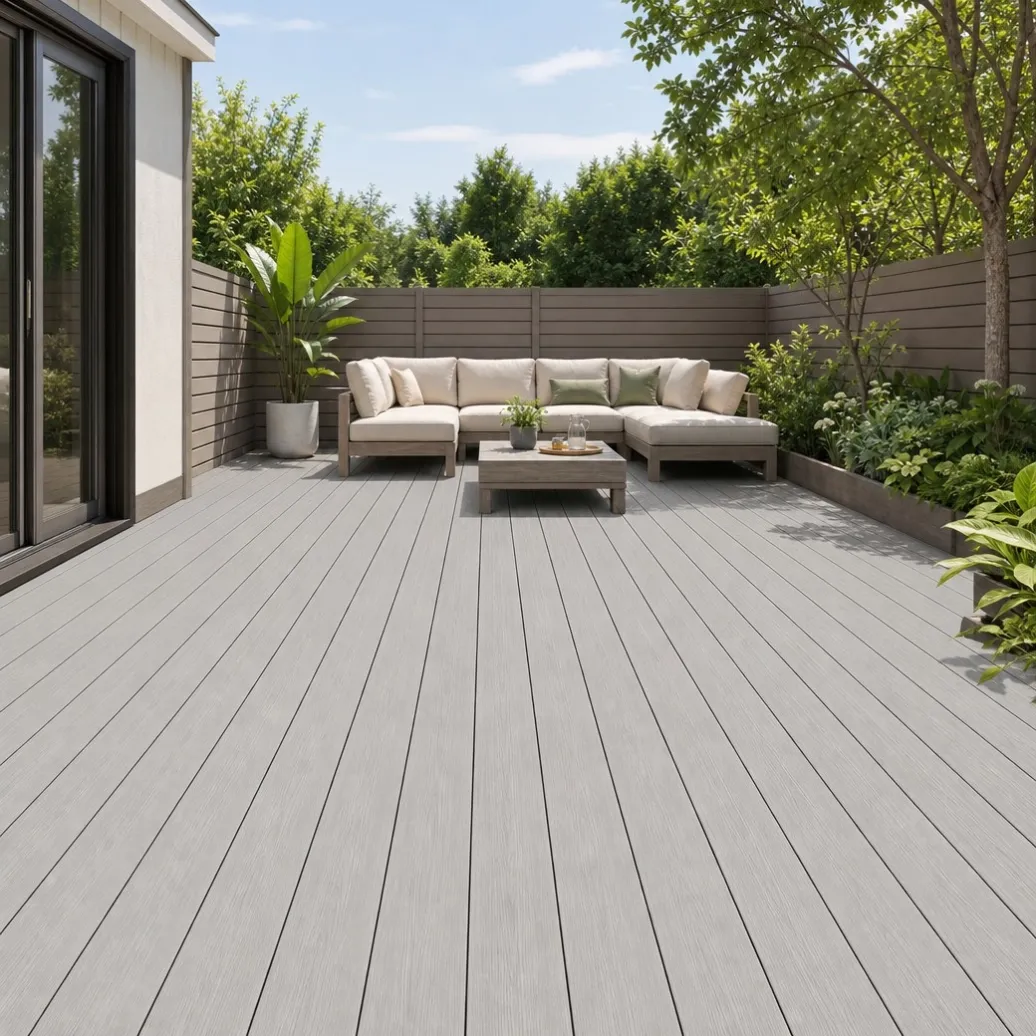
Wood-Plastic Composite (WPC) has emerged as a transformative material in the construction and outdoor design industries, combining the natural aesthetics of wood with the durability and low maintenance of advanced polymers. As a trusted WPC decking supplier and composite materials provider, NewYongTech is committed to helping global B2B buyers understand the science behind this innovative material and its advantages over traditional building materials.
What Is Wood-Plastic Composite?
Wood-plastic composites are engineered materials made by blending wood fibers or wood flour with thermoplastic polymers such as polyethylene (PE), polypropylene (PP), or polyvinyl chloride (PVC) . This unique combination creates a material that offers the visual warmth of natural timber while delivering significantly enhanced durability and weather resistance.
Material Composition Breakdown
Component | Typical Proportion | Function |
Wood Fibers | 35% – 65% | Provides natural appearance, structural rigidity, and texture |
Plastic Polymers | 30% – 50% | Binds wood fibers, provides moisture resistance and durability |
Additives | 5% – 10% | UV stabilizers, color pigments, anti-fungal agents, fire retardants, bonding agents |
The wood component in WPC can be sourced from sawdust, wood flour, recycled wood waste, or even agricultural residues such as hemp, cotton stalks, rice husks, and sunflower seed husks . The plastic component is often derived from post-consumer recycled materials, including recycled grocery bags and milk jugs (HDPE), contributing to the material's sustainability profile .
How WPC Is Manufactured
The manufacturing process transforms raw wood and plastic into a high-performance construction material through several key stages :
Material Preparation – Wood fibers are cleaned, dried, and ground into fine particles. Plastics are cleaned and shredded into pellets
Mixing and Blending – Wood fibers, plastic pellets, and additives are mixed in precise ratios to ensure uniform distribution
Heating and Extrusion – The mixture is heated until the plastic melts and is pushed through an extrusion machine to form continuous decking profiles
Cooling and Shaping – The extruded boards are cooled and cut to length
Processing temperatures must remain below 200°C to avoid thermal decomposition of the wood fibers . Common processing methods include profile extrusion, injection molding, and board pressing techniques .
Key Performance Properties
Superior Moisture Resistance
Unlike solid wood, which absorbs water and swells, WPC exhibits considerably lower water absorption and swelling . This characteristic makes WPC decking and cladding ideal for outdoor applications exposed to rain, humidity, and coastal salt spray.
Enhanced Dimensional Stability
WPC maintains its shape across seasonal temperature changes, resisting the warping, cupping, and gapping that commonly affect timber . The material performs reliably across a -40°C to 70°C temperature range.
Mechanical Performance
While WPC generally exhibits lower strength and stiffness than solid wood, its mechanical properties are comparable to those of OSB and MDF boards . With a density of 1.2 – 1.45 g/cm³ and flexural strengths of 22 – 28 MPa, WPC products provide robust structural performance for outdoor flooring, fencing, and cladding applications.
Low Flammability Options
Advanced WPC formulations with fire-retardant additives can achieve limiting oxygen index values up to 38%, compared to 27% for standard wood particle board and 19% for untreated WPC . This makes WPC suitable for building code-compliant applications.
Environmental Benefits
WPC is recognized as an environmentally responsible building material :
Recycled Content – Both wood and plastic components can be sourced from recycling streams
Zero Formaldehyde Emissions – WPC products typically contain no formaldehyde-releasing binders
100% Recyclability – Production residues and end-of-life WPC products can be ground, melted, and reprocessed into new products
Resource Conservation – Using recycled plastics and wood waste reduces landfill burden and preserves forest resources
B2B Applications
WPC's versatility makes it suitable for a wide range of commercial and infrastructure applications:
Outdoor Decking – Residential patios, commercial plazas, boardwalks, and pool surrounds
Fencing Systems – Privacy screens, semi-privacy panels, and acoustic barriers
Wall Cladding – Ventilated facades, solid panels, and architectural features
Outdoor Structures – Pergolas, gazebos, and pavilions
Outdoor Furniture – Benches, dining sets, and landscape elements