
Aug 14, 2026WPC Profiles
Sustainability, Innovation & Future Trends in Wood-Plastic Composites
Wood-plastic composites represent one of the most significant material innovations in the building industry of the past two decades.
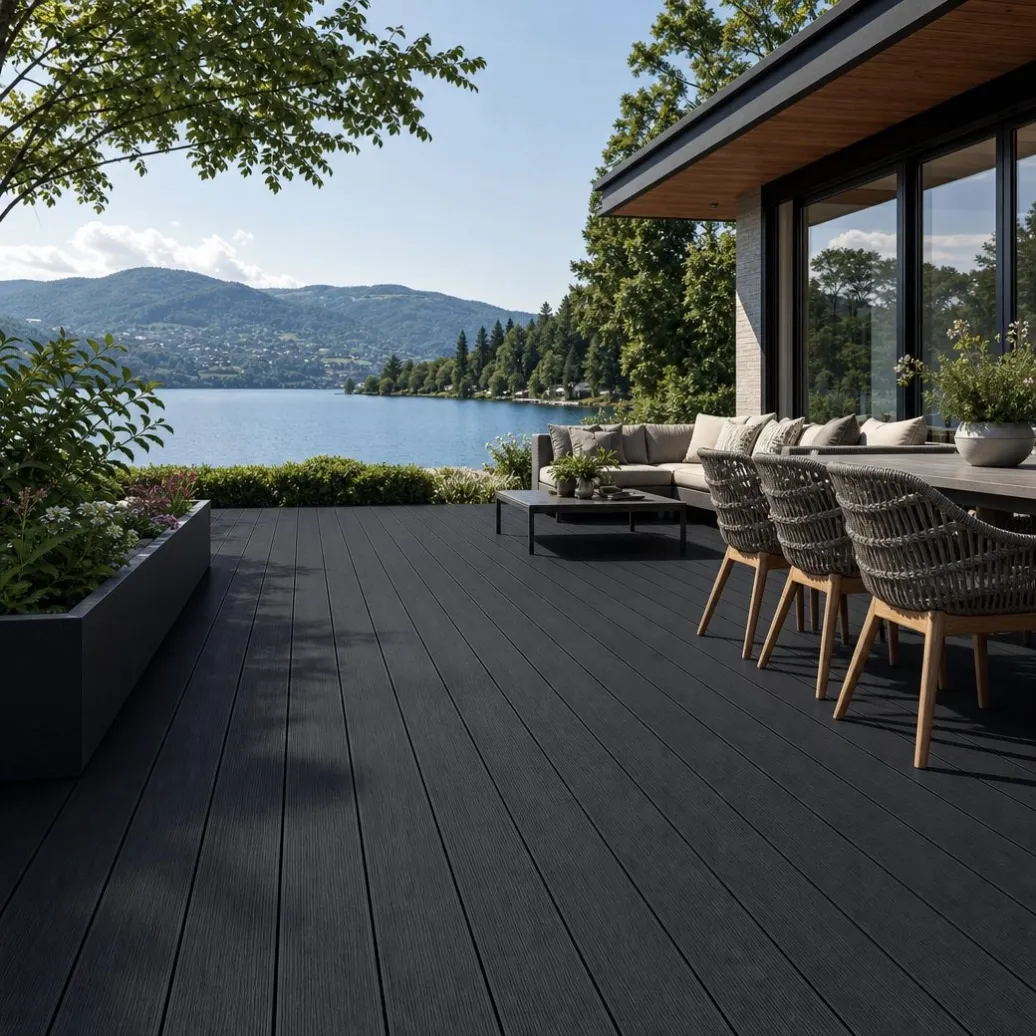
Wood-plastic composites represent one of the most significant material innovations in the building industry of the past two decades. As a wholesale WPC products distributor and sustainable outdoor materials supplier, NewYongTech tracks the technological advancements and market trends shaping the future of this versatile material.
The Circular Economy Advantage
WPC is inherently aligned with circular economy principles, offering multiple pathways to environmental sustainability :
Recycled Content
WPC products typically contain 60–70% wood fibers and 30–50% plastic polymers by mass . Both components can be sourced from recycling streams:
Wood component – Sawdust, wood flour, recycled wood waste, agricultural residues (hemp, rice husks, sunflower husks)
Plastic component – Post-consumer HDPE (recycled milk jugs, grocery bags), recycled PP and PVC
End-of-Life Recyclability
WPC products at the end of their useful life can be ground, melted, and reprocessed into new products . This closed-loop recycling potential dramatically reduces landfill burden and preserves raw material resources.
Environmental Impact Reduction
The "old-for-new" take-back scheme for WPC decking has demonstrated significant environmental benefits. Recycling end-of-life WPC products as feedstock for new production can reduce environmental impacts by approximately 20% over the product life cycle .
Zero Formaldehyde Emissions
Unlike conventional pressed wood products that use formaldehyde-based binders, WPC materials are typically formaldehyde-free, contributing to healthier indoor and outdoor environments .
Evolution of WPC Technology
The past 20 years have witnessed continuous evolution in WPC technology :
Early Challenges (2000–2010)
Early WPC products faced issues with water absorption, UV fading, and biological degradation. Research focused on material stabilization and improving moisture resistance .
Maturation (2010–2020)
Manufacturers developed advanced additives, including UV stabilizers, anti-fungal agents, and improved bonding agents. Co-extrusion technology emerged, adding protective cap layers that dramatically enhanced fade and stain resistance .
Current Innovation (2020–Present)
The focus has shifted to sustainability – using higher proportions of recycled material without compromising performance, developing low-flammability formulations, and optimizing material recyclability .
Market Growth & Global Demand
The global WPC market continues to expand, driven by:
Increasing environmental awareness – Consumers and regulatory bodies demand sustainable building materials
Urbanization – Growing construction activity in developing economies
Durability requirements – Property owners and facility managers seek materials with longer service lives
Maintenance cost reduction – Hospitality and commercial operators prioritise zero-maintenance solutions
WPC applications extend beyond decking to include fences, cladding, pergolas, gazebos, outdoor furniture, and interior furniture components . The material is increasingly used in building envelope systems, where its durability and thermal performance contribute to building energy efficiency .
Sustainability Innovations
Alternative Natural Fibers
While wood is the most common fiber source, research has explored replacing wood with other lignocellulosic materials:
Hemp, sisal, kenaf, and flax fibers
Agricultural residues such as wheat straw and rice husks
Recovered sludge cellulose from wastewater treatment
These alternatives reduce pressure on forestry resources and create value from agricultural waste streams.
Bio-Based Polymers
The development of bioplastics (such as PLA) as alternatives to petroleum-based polymers represents a promising area of research, further reducing the environmental footprint of WPC products .
Fire Retardant Formulations
Research at institutions like Fraunhofer WKI has demonstrated that WPC can achieve low flammability through appropriate additives, with limiting oxygen index values reaching 38% . This expands the application range for WPC to building code-compliant commercial and multi-unit residential projects.
Future Directions
Material Performance Enhancement
Improved co-extrusion technology for longer warranty periods
Enhanced thermal stability for more extreme climates
Higher load-bearing capacity for structural applications
Design Innovation
New colors, textures, and surface finishes
Customizable patterns and embossing for architectural differentiation
Integration with lighting and smart building systems
Life Cycle Optimization
Development of comprehensive Environmental Product Declarations (EPDs)
Regional take-back schemes to facilitate global recycling networks
Optimization of manufacturing processes to reduce energy consumption
NewYongTech's Commitment
As a responsible WPC distributor, NewYongTech is committed to:
Sourcing products with verified recycled content
Providing transparent material specifications and compliance documentation
Supporting clients with technical guidance on sustainable product selection
Continuously updating our product range to incorporate the latest WPC innovations
The future of WPC is bright. As the construction industry continues to embrace sustainable, low-maintenance, and high-performance materials, WPC will remain at the forefront of building innovation.